

Social media continues to be a core part of most media campaigns, but how it is placed, optimized, and measured is changing quickly. The biggest shifts moving into 2026 are not about new platforms or headline-grabbing formats. They are about how automation, data, and platform behavior are reshaping the buying process itself.
For our clients, this means success in paid social will depend less on manual controls and more on how clearly business goals, data signals, and creative direction are defined. As a media partner, EXL’s role is evolving alongside the platforms and CRM systems, helping clients navigate these changes while protecting performance and efficiency.
AI is Becoming the Foundation of Paid Media Buying
Across all major platforms (Meta, Google, TikTok, LinkedIn) AI isn’t just helping anymore. In 2026, AI will run bidding, targeting, creative selection, and optimization. While AI will never replace digital media strategists, platforms will continue to absorb tactical control by intentionally removing opportunities for buyers to make incremental changes.
Meta publicly announced that it plans to allow fully created and targeted ads using AI by the end of 2026. An agency or advertiser would provide an image and budget, and AI will generate the creative, identify the audience, and suggest the budget allocation. ([investopedia.com], 2025)
An industry analysis noted that predictive optimizations, where platforms proactively reallocate spend, audiences, and creative variations could become the default in 2026 instead of an optional add-on. ([leadenforce.com, 2025])
For clients, and EXL, the challenge is not learning how to “use AI,” but understanding how to work with it proficiently for optimal campaign performance. As platforms automate more decisions, the input we provide becomes so much more important. Clear objectives, accurate conversion tracking, and aligned creative direction give AI the signals it needs to perform effectively. Without those inputs, performance can become inconsistent or skewed toward surface-level engagement instead of meaningful outcomes.
Targeting Is Shifting Away from Manual Segments
Platforms are relying more on first-party data and AI modeling; targeting methods like interest groups or demographic filters will become less central. Instead, platforms have already started using behavioral signals, contextual cues, and modeled patterns to decide who is most likely to engage.
This won’t mean targeting disappears, but it does mean that over-segmenting audiences will limit performance. Campaigns built to allow platforms to learn and adapt tend to scale more efficiently than those constrained by strict targeting rules. ([leadenforce.com, 2025])
For clients and agencies, this shift will require a mindset change. Instead of focusing on defining every audience detail up front, the emphasis will focus on defining the right outcome and allowing platforms to optimize toward it using real performance signals.
We All Want to Know What AI-Driven Buying Means for Quality
As platforms automate audience selection and campaign optimization, low-quality or spam traffic appear more often in results. This is top-of-mind for EXL as our buyers have often found invalid traffic and leads as we move into working more closely with AI.
A study by Lunio Research in 2024, before full AI implementation, found that 8.5 percent of paid traffic across all major digital platforms was invalid or non-human. In 2026, an industry report warns that AI has made invalid traffic much harder to detect as advanced bots increasingly mimic human behavior, and another study from the 2025 Imperva Bad Bot Report found that AI-driven bots now generate more than half of global internet traffic, which surpasses human traffic for the first time in history.
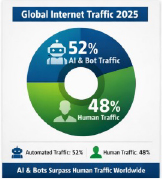
AI systems optimize toward the signal that best meets the campaign objective. If low-quality actions meet that objective, the system can unintentionally amplify them. Bots, for example, can generate high volumes of landing page views or form submissions that count as conversions but don’t reflect real intent. Research shows that optimizing to meaningful outcomes, verified leads instead of page views will reduce low-quality traffic and improve overall performance.
Human-based quality control is the most important spam filter in an AI-driven environment. Regular performance audits, careful selection of optimization goals, and human oversight of automation help campaigns drive real results and value. At EXL Media, our dedicated team of digital strategists continuously monitors performance, validates conversion quality, and pressure-tests platform recommendations. While AI handles execution at scale, human expertise ensures the inputs are correct, the signals are meaningful, and performance reflects real outcomes.
Creative Plays a Larger Role as Platforms Automate Buying
As AI takes on more responsibility for delivery and optimization, creative will be one of the most influential factors clients can shape. Platforms evaluate how people interact with ads, including engagement, time spent, and follow-up actions, and use those signals to inform delivery decisions.
Creative plays a direct role in how efficiently AI campaigns perform. In industries like hospitality, medical, and real estate, messaging, clear calls to action, and creative aligned with audience intent help platforms learn faster and optimize more effectively.
When creative reflects the decision-making mindset of the audience, whether it’s booking a stay, requesting care, or exploring a property, algorithms receive a stronger signal and performance improves.
Ultimately, AI will dictate what is shown and to whom, which will make human oversight essential. Ongoing creative testing, informed interpretation, and budgets that allow for meaningful A/B testing are required for true insight and to be sure automation is learning from high-quality inputs rather than surface-level engagements.
Platform Growth and Where to Watch in 2026
Overall, Meta still captures the largest share of social ad spend and is a core performance driver for many campaigns. However, other platforms remain important based on how people engage with content.
TikTok continues to influence how content is consumed and how creative is structured, even though it is not the primary performance channel for every client. Its impact in 2026 is less about direct conversion performance and more about how it has reshaped user expectations across all major social platforms.
TikTok has trained users to make rapid decisions about relevance, often within the first one to three seconds of content. This behavior now carries into Meta, YouTube, and other in-feed environments. Creative that establishes relevance immediately, introduces a clear idea upfront, and delivers value quickly tends to hold attention longer and generate stronger engagement signals. The platform has also normalized a more authentic visual language. Users respond more positively to creative that feels human, observational, and natural rather than overly polished or scripted.
Reddit audiences and advertising capabilities are showing strong growth and relevance, making it the platform worth watching in 2026.

Why? Not only does Reddit have approximately 185 million weekly active users in the US, it offers something that many other platforms do not: context and community. People go to Reddit to ask questions, get advice, and read real conversations about topics they care about. That makes it a place where ads can be shown alongside discussions that are already relevant to the audience. When ads appear in these communities, people are more likely to engage because they are in a research or consideration mindset rather than just scrolling.
What This Means for Clients Planning for 2026
- Clear conversion goals and measurable outcomes for platform optimization.
- Strong first-party data and clean signals to guide targeting and reduce wasted spend from invalid or low-quality traffic
- Creative that aligns with audience expectations and supports performance
- Budget allocations for creative A/B testing and insight
- Flexibility in platform selection
At EXL Media, our focus is on helping our clients adapt to these changes while maintaining performance, efficiency, and accountability. As platforms automate more of the buying process, our role becomes even more important in guiding strategy, interpreting results, and ensuring media investments align with real business outcomes.
Sources
- Meta Plans Full AI Ad Creation and Targeting by End of 2026. Investopedia, 2025.
- Predictive Optimization and Automation Trends in Paid Social. Leadenforce, 2025.
- The Growing Role of First-Party Data in Paid Media Performance. Digiday, 2025.
- How Social Platforms Are Becoming Discovery and Search Tools. Social Media Today, 2025.
- Reddit’s Growing Influence in the Social Media Landscape. The Guardian, 2026.
- State of Invalid Traffic and Ad Fraud Across Paid Social and Programmatic Channels. Fraud0, Q2 2025.